PRODUCT CENTER / COMPLETE SYSTEMS
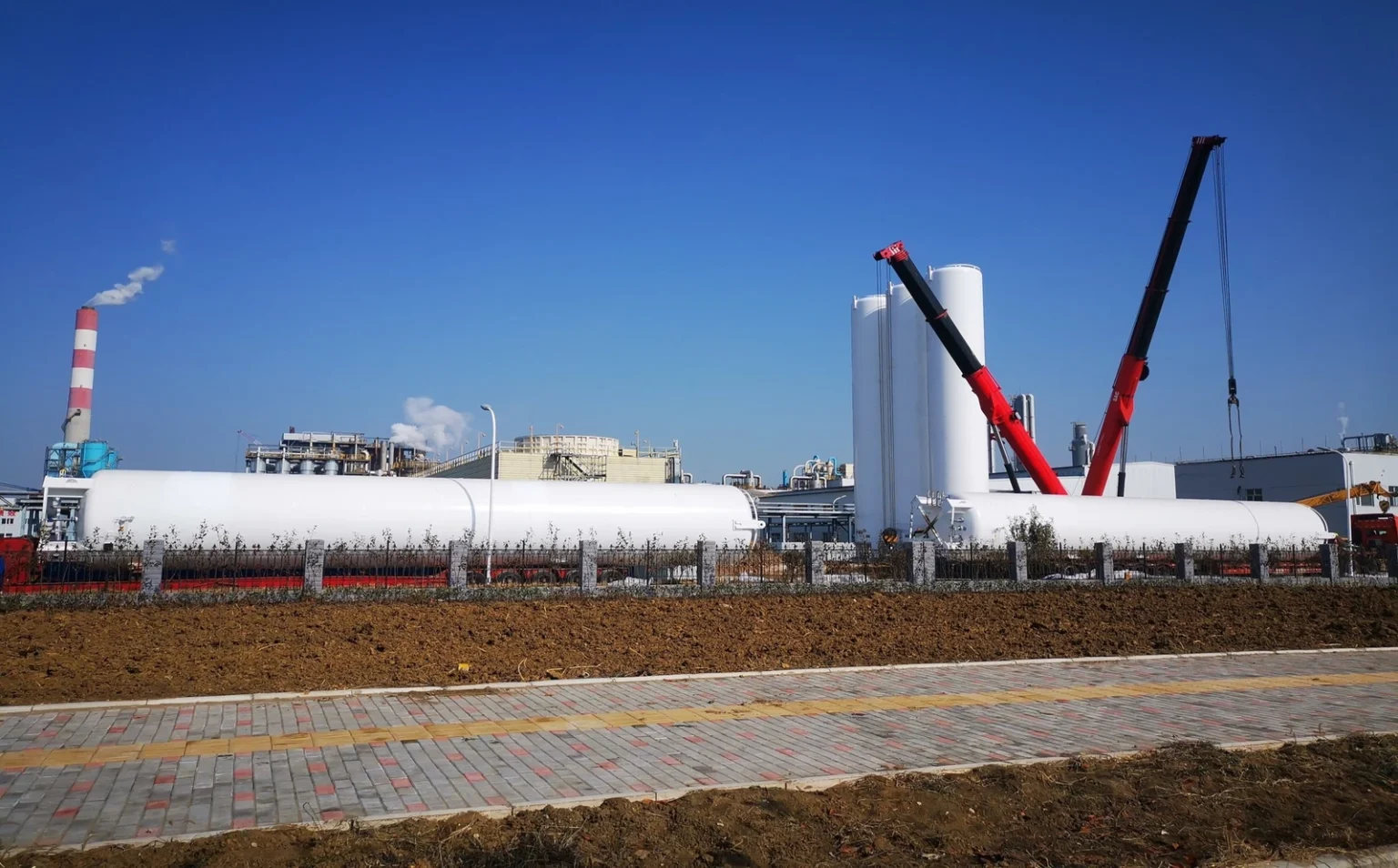
Biogas CO₂ Recovery Plant
Biogas upgrading can produce a CO₂-rich stream alongside biomethane. Its suitability for recovery depends on the upgrading technology, methane content, sulfur compounds, trace organics and the intended product market.
| Project element | Design basis |
|---|---|
| Preferred assessment point | CO₂-rich stream from the specified upgrading process |
| Critical inputs | Methane, sulfur, oxygen, moisture and source-related traces |
| Key integration | Upgrading operation, vent handling and downstream conditioning |
APPLICATION OVERVIEW
Evaluate the CO₂ stream after upgrading.
01
Identify the stream
Distinguish raw biogas from the CO₂-rich off-gas after upgrading. Record the upstream separation technology and expected changes in composition.
02
Track methane and sulfur
Define residual methane, hydrogen sulfide and other relevant species. Feed variation and breakthrough scenarios need attention as well as steady-state analysis.
03
Assess trace contaminants
Consider feedstock-related compounds, siloxanes or other contaminants where applicable. Testing must reflect the source and analytical detection requirements.
04
Set the product pathway
Compare realistic industrial, liquid and food-related destinations. Source qualification, product acceptance and economics should precede equipment selection.
FROM SOURCE TO PRODUCT
Biogas upgrading off-gas CO₂ recovery process
The route below illustrates a CO₂-rich feed. Flue gas needs upstream capture; biogas-derived streams need upstream separation and source-specific conditioning.
Match the plant to the gas source.
A gas holder or collection system balances variable production. Source acceptance and controlled diversion protect the downstream process from unsuitable gas.
Prepare the gas for compression.
Pretreatment depends on source contaminants. Fermentation carryover, soluble impurities, sulfur species and solvent traces require different treatment and monitoring strategies.
Create the required process conditions.
Compression and intercooling support the selected purification and liquefaction route. Liquid separation and machine protection are engineered around actual inlet conditions.
Control more than CO₂ percentage.
Adsorption and other selected purification stages manage water and specified trace contaminants. Bed regeneration and switching must preserve product quality throughout the operating cycle.
Produce liquid CO₂ to the agreed specification.
Refrigeration condenses CO₂. Refining and vent management address light gases where required. Product testing determines acceptance; liquefaction alone does not establish food-grade status.
Protect quality to the point of use.
Liquid storage, loading or vaporization must preserve product quality and comply with applicable pressure-system requirements. Operating procedures and traceable quality records complete the system.
PROCESS EQUIPMENT
CO₂ washing & pretreatment
Washing and pretreatment address selected contaminants and entrainment before downstream processing.
Explore equipmentPROCESS EQUIPMENT
CO₂ compression systems
Compression establishes pressure for the selected purification and liquefaction route.
Explore equipmentPROCESS EQUIPMENT
CO₂ adsorption & drying
Drying controls water before cold processing and product delivery.
Explore equipmentSPECIFICATION & SCOPE
Biogas CO₂ recovery design requirements
We develop the process around the gas analysis, flow profile and required product. State every critical impurity limit and the measurement method alongside the CO₂ concentration.
| Item | Project definition |
|---|---|
| Preferred assessment point | CO₂-rich stream from the specified upgrading process |
| Critical inputs | Methane, sulfur, oxygen, moisture and source-related traces |
| Key integration | Upgrading operation, vent handling and downstream conditioning |
| Product acceptance | Application-specific; food-grade suitability is not automatic |
| Next step | Share the upgrading process description and representative analysis |
Capacity, utility consumption and product guarantees are finalized in the project proposal at agreed inlet conditions. Compare the scope, utility boundaries and acceptance tests using our CO₂ plant procurement and acceptance guide.
RELEVANT YTC EXPERIENCE
Related CO₂ recovery project references
Compare source, scale and specification with your own requirements.
FREQUENTLY ASKED QUESTIONS
Biogas CO₂ recovery questions
Can raw biogas feed a CO₂ liquefier?
Raw biogas is a different mixture and requires a defined separation route. A downstream liquefier cannot substitute for the necessary upstream gas treatment.
Is biogenic CO₂ always acceptable for food use?
No. Biological origin does not remove the need for source qualification, impurity assessment and controlled product handling.
For food and beverage applications, review source qualification and the selected sample reports.
TECHNICAL INSIGHT
Understand the design decisions.
Start at the actual upgrading outlet
A CO₂ recovery assessment for a biogas site should identify exactly which stream is available. Raw biogas and the CO₂-rich stream separated during upgrading have different compositions and functions. The upgrading technology determines how much methane, oxygen, water and other material follows the CO₂ outlet, as well as its pressure and flow pattern. Those outlet conditions form the starting point for downstream recovery.
The assessment should also explain what happens during upgrading start-up, shutdown or an upset. An average composition may conceal short periods of high methane or contaminant loading. Stable communication between the upgrading controls and CO₂ system can help define when gas is admitted for processing.
Connect feedstock knowledge with analysis
Digester feedstock history helps identify the contaminants worth investigating. Sulfur compounds and moisture are common assessment topics; other trace species depend on the actual feedstocks and upstream treatment. The sampling program should represent the proposed source rather than borrowing an analysis from an unrelated agricultural or waste facility.
Residual methane affects the material balance and vent-management discussion. The CO₂ product route should account for methane separation and its destination, alongside other non-condensable gases. A high measured CO₂ percentage does not by itself establish acceptable emissions, product quality or food-use suitability.
Develop a product pathway in parallel with engineering
Potential destinations may include industrial liquid supply, a specifically qualified food or beverage market, or other defined uses. Customer acceptance should be explored early because it determines the analytical plan, product handling and documentation. Biological origin describes where the carbon came from; it does not replace the product specification.
Provide us with the upgrading process description, the CO₂-outlet analysis, feedstock history, flow profile and target customer requirements. A useful feasibility discussion can then identify pretreatment, compression, drying, purification and liquefaction needs, together with unresolved source questions. Include the biomethane system’s operating priorities so a downstream CO₂ project supports the overall site rather than constraining its main product.
Questions for the technical review
Should the calculator use raw-biogas flow or upgrading off-gas flow?
Use the flow and CO₂ concentration of the exact stream being assessed. Mixing raw-biogas flow with off-gas concentration overstates or understates the available CO₂.
Can the same design serve agricultural and waste-derived biogas?
The process principles may overlap, but source history and contaminant profiles can differ. Each actual source requires its own assessment.
START WITH YOUR SOURCE
Turn your CO₂ source into a defined project.
Send your gas analysis, flow profile, product target and project location. We will help connect the technical questions with a practical supply scope.
CONTINUE YOUR TECHNICAL REVIEW
Connect the specification with the evidence.
Relevant references
Review source, nominal capacity and the recorded supply scope.
Explore ↗ENGINEERING TOOLAssess your CO₂ source
Estimate recoverable quantity using visible assumptions.
Explore ↗BUYING GUIDEPrepare your specification
Define feed conditions, quality, utilities and acceptance before comparing proposals.
Explore ↗