
PROCESS EQUIPMENT
CO₂ Gas Collection & Buffering
A collection system connects the source to the recovery train and smooths short-term variation. It is not a substitute for a valid mass balance.
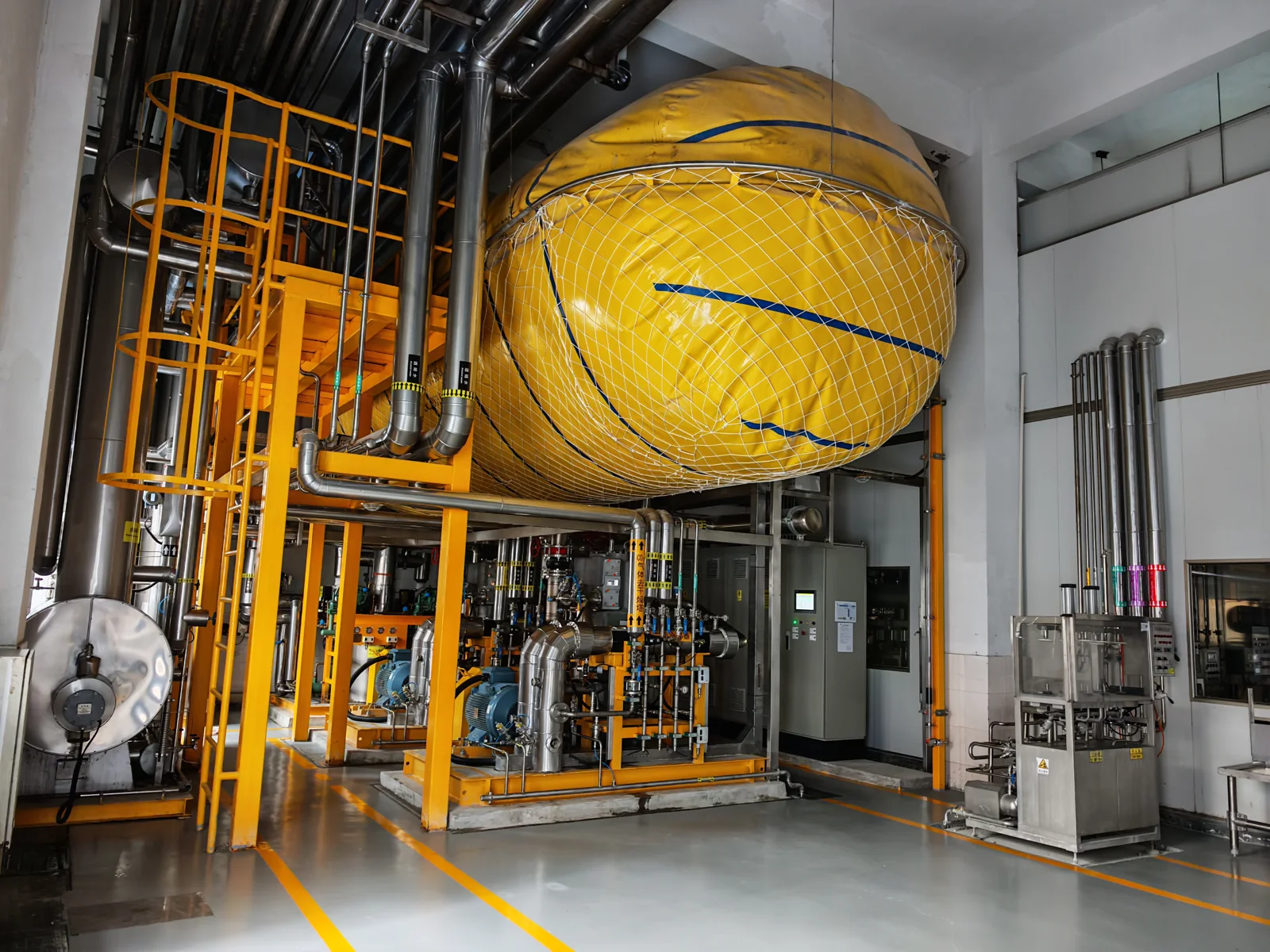
INSIDE THIS SUBSYSTEM
How it works in your plant.
How it works
We collect suitable source gas and use a gas holder to balance short changes in flow before compression. Collection controls keep unsuitable gas out of the recovery train.
System interfaces
The collection network connects fermentation vessels or another qualified source to pretreatment. Gas-holder level and available inlet pressure inform compressor loading; liquid storage serves a separate downstream duty.
Operation & maintenance
Review trends in accepted flow, gas quality and holder level. Include foam carryover, condensate drainage, air ingress and the host plant’s cleaning cycle in the operating plan.
What we need for selection
Minimum, normal and peak gas flow; batch timing; collection pressure; gas composition; accepted collection points; cleaning interfaces.
We confirm the equipment arrangement, utilities, inspection documents and acceptance criteria in your project proposal.
EXPLORE THE SYSTEM
Related process equipment.
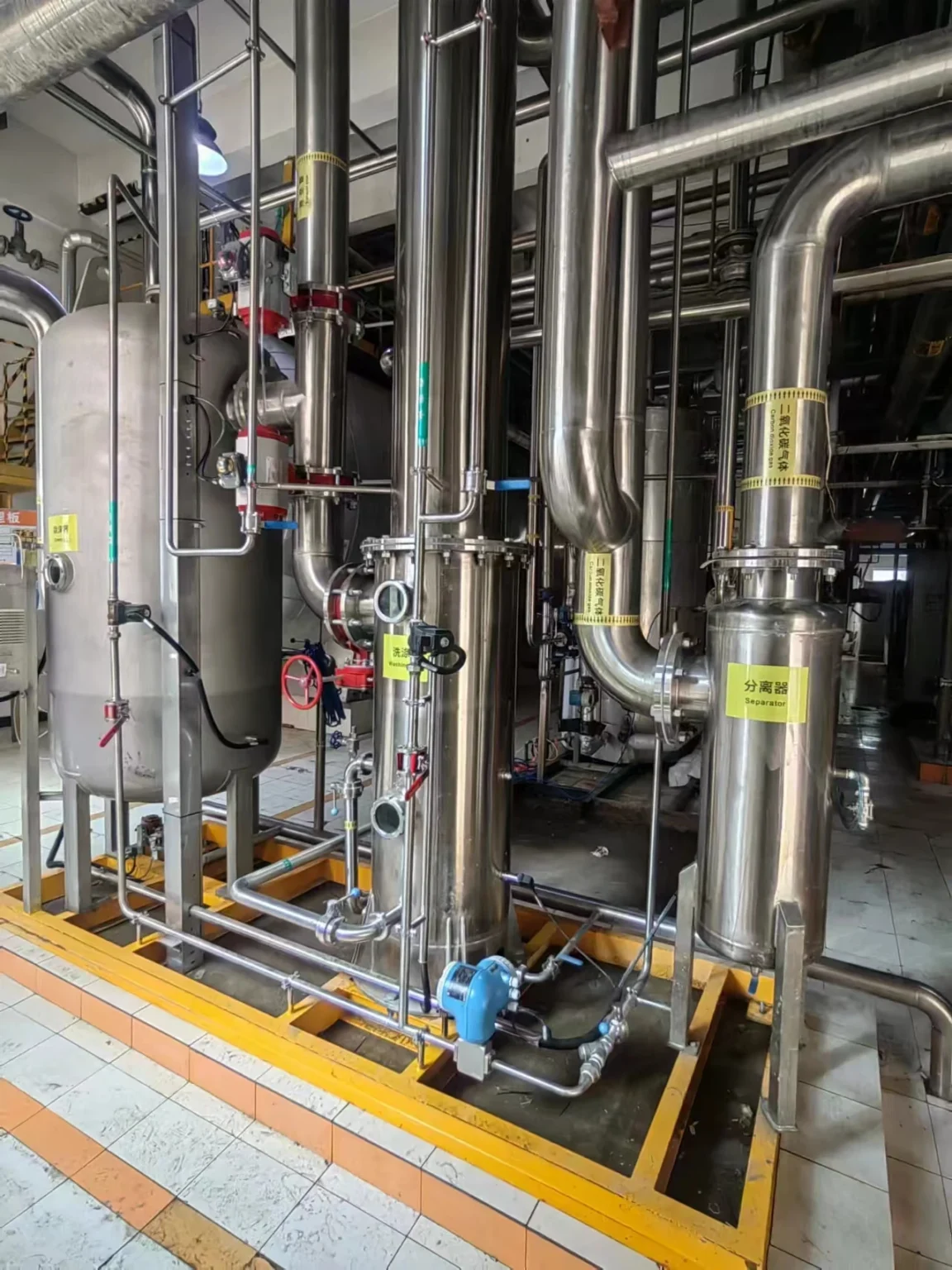
PROCESS EQUIPMENT
CO₂ washing & pretreatment
Washing and pretreatment address selected contaminants and entrainment before downstream processing.
Explore equipment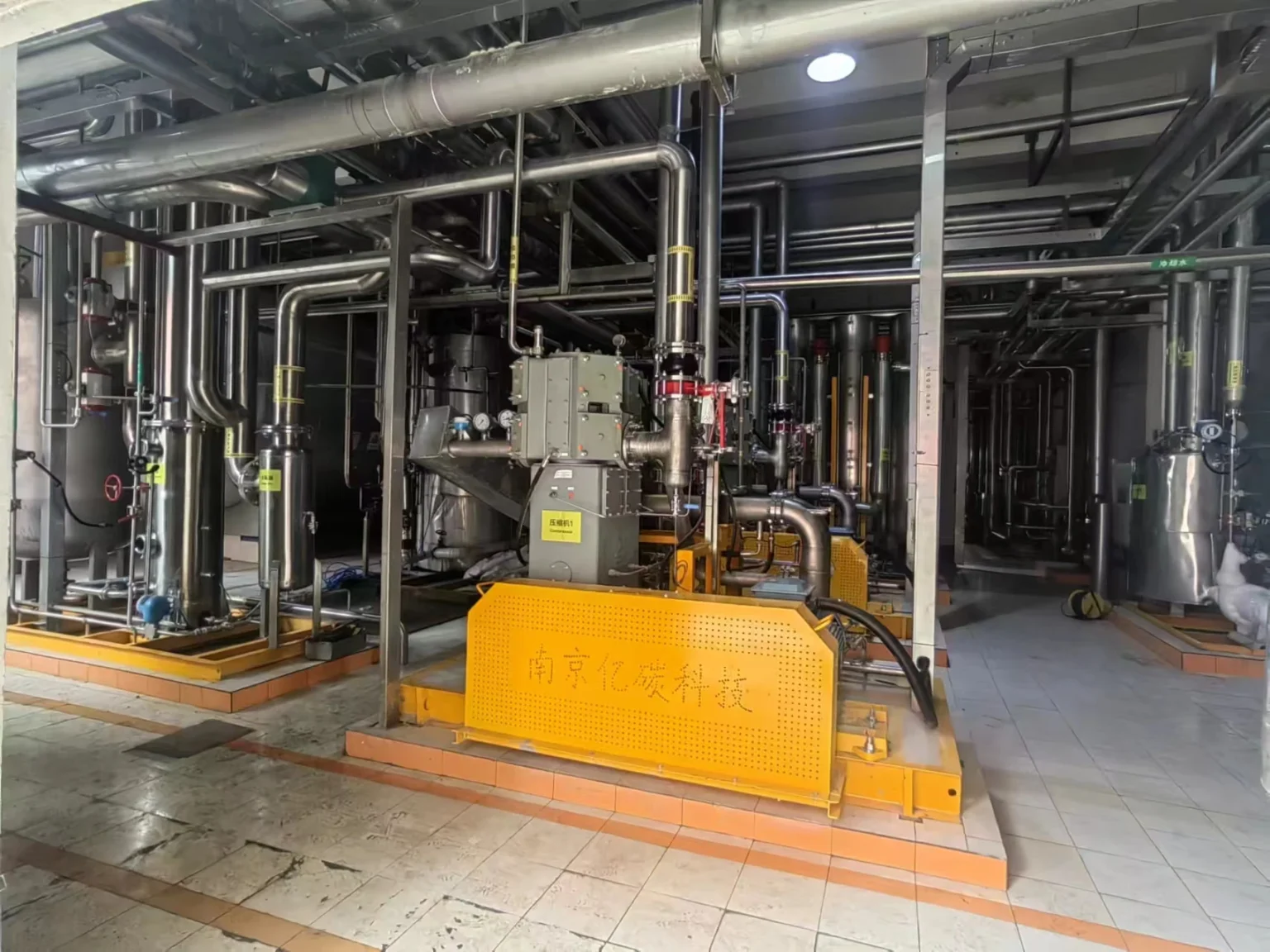
PROCESS EQUIPMENT
CO₂ compression systems
Compression establishes pressure for the selected purification and liquefaction route.
Explore equipment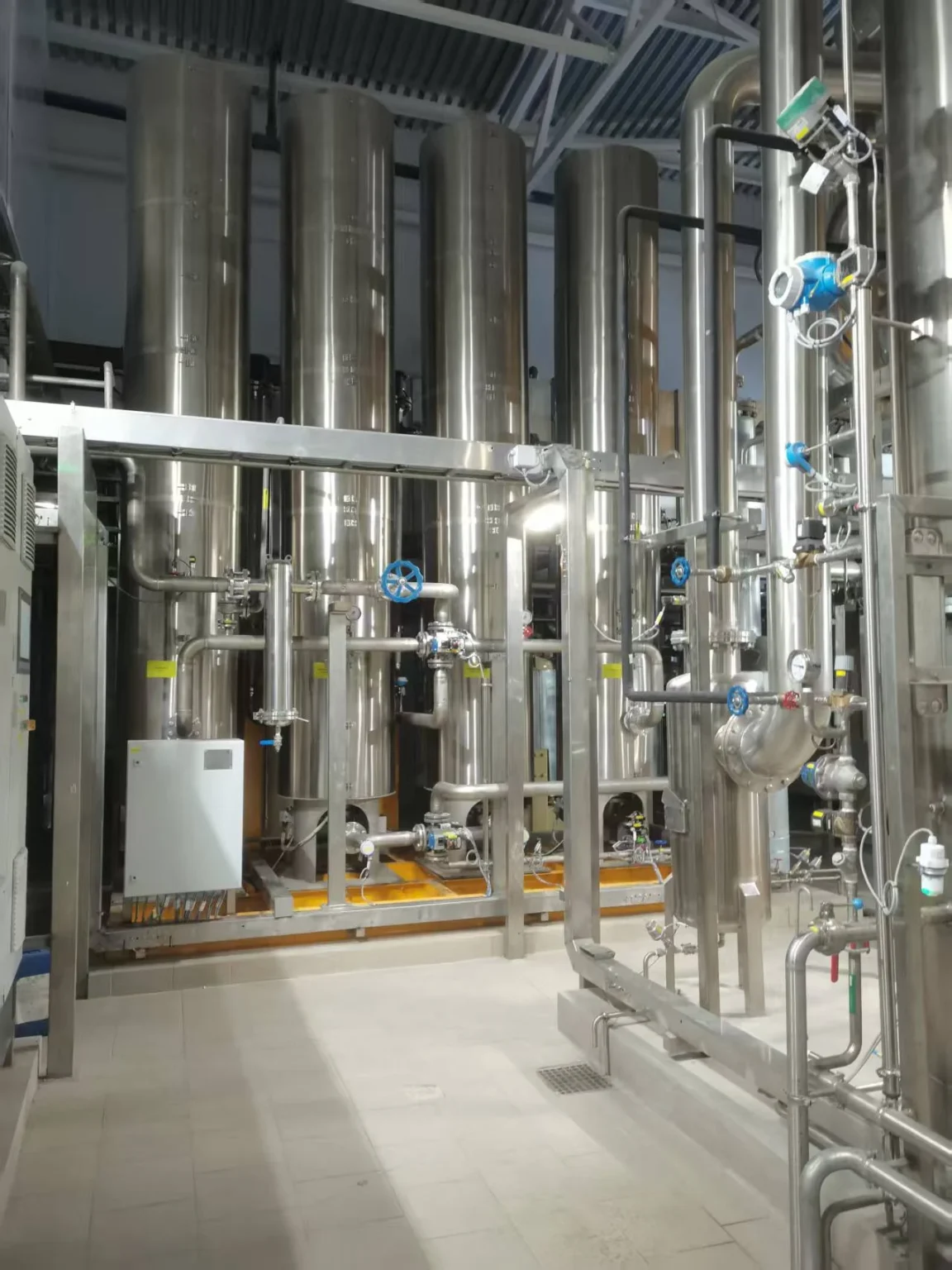
PROCESS EQUIPMENT
CO₂ adsorption & drying
Drying controls water before cold processing and product delivery.
Explore equipmentTECHNICAL INSIGHT
Understand the design decisions.
A controlled interface with the source
Gas collection establishes which source enters the recovery train, when it enters and under what conditions. For batch fermentation this can involve several vessels at different stages. For an industrial source it may involve parallel process lines. A useful collection design identifies each connection, its available pressure, the quality admission criteria and the means of isolating a source that is not ready for recovery.
The objective is to deliver an acceptable feed without disrupting the host process. Pressure variation, entrained liquid and gas-rate changes should be considered together. The collection system must fit the source’s permissible conditions; the recovery plant cannot simply impose its preferred suction conditions on an upstream process.
Size buffering against a time profile
A gas buffer accommodates a temporary difference between incoming gas and the amount the recovery train accepts. Its useful capacity is the available volume across the permitted operating range, rather than a vessel’s external dimensions alone. The required buffer follows from the size and duration of the mismatch.
A large buffer cannot solve a sustained excess of source gas over recovery capacity. Conversely, selecting a large compressor for a short peak may create difficult low-load operation during the rest of the day. A time-based comparison of source flow, buffer inventory and plant throughput makes that tradeoff visible.
Make interfaces easy to operate and maintain
Collection scope should define condensate management, quality measurement, source-isolation status and communication with downstream equipment. Inspection access and the ability to identify which source is contributing to the header help operators investigate changing feed conditions.
Provide us with the source schedule, pressure limits, measured flow range and site layout. The resulting arrangement can then connect collection piping, buffering and compressor control around the actual production pattern. During handover, drawings and control descriptions should make the collection boundary understandable to both the host-process team and the CO₂ recovery operators.
Questions for the technical review
Is buffer volume the same as liquid storage capacity?
No. Gas buffering normally addresses short-term feed variation, while liquid storage balances product production and use. Their conditions and useful capacity are different.
Can one collection header accept every source?
Only sources within the agreed admission envelope should be connected for processing. Mixing requires a review of pressure, contamination, isolation and traceability.
START WITH YOUR SOURCE
Turn your CO₂ source into a defined project.
Send your gas analysis, flow profile, product target and project location. We will help connect the technical questions with a practical supply scope.
CONTINUE YOUR TECHNICAL REVIEW
Connect the specification with the evidence.
Relevant references
Review source, nominal capacity and the recorded supply scope.
Explore ↗ENGINEERING TOOLAssess your CO₂ source
Estimate recoverable quantity using visible assumptions.
Explore ↗BUYING GUIDEPrepare your specification
Define feed conditions, quality, utilities and acceptance before comparing proposals.
Explore ↗