YTC PROJECT REFERENCE
Qiandao Lake Brewery: integrated 1,000 kg/h CO₂ recovery
Hangzhou Qiandao Lake Brewery is recorded in our project register in 2024 with an 8,000 t/y nominal recovery capacity and a 1,000 kg/h system scope.

YTC / PHOTOGRAPHIC RECORD
From collection to the process equipment
| Reference element | Recorded basis |
|---|---|
| Source / application | Brewery |
| Product specification | High-purity food-grade, purity ≥99.998% |
| Record IDs | 104 |
A brewery reference with a clear capacity basis
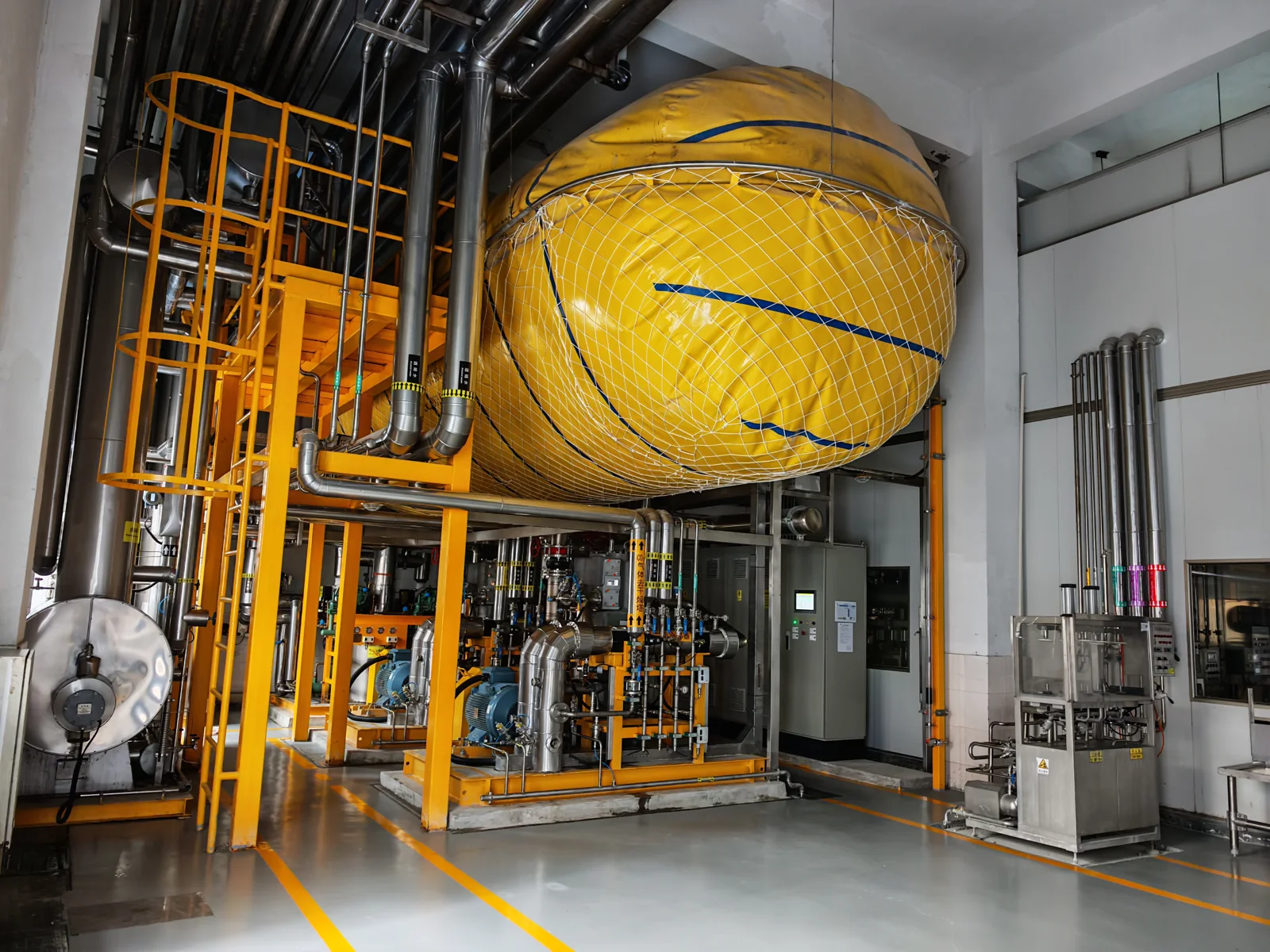
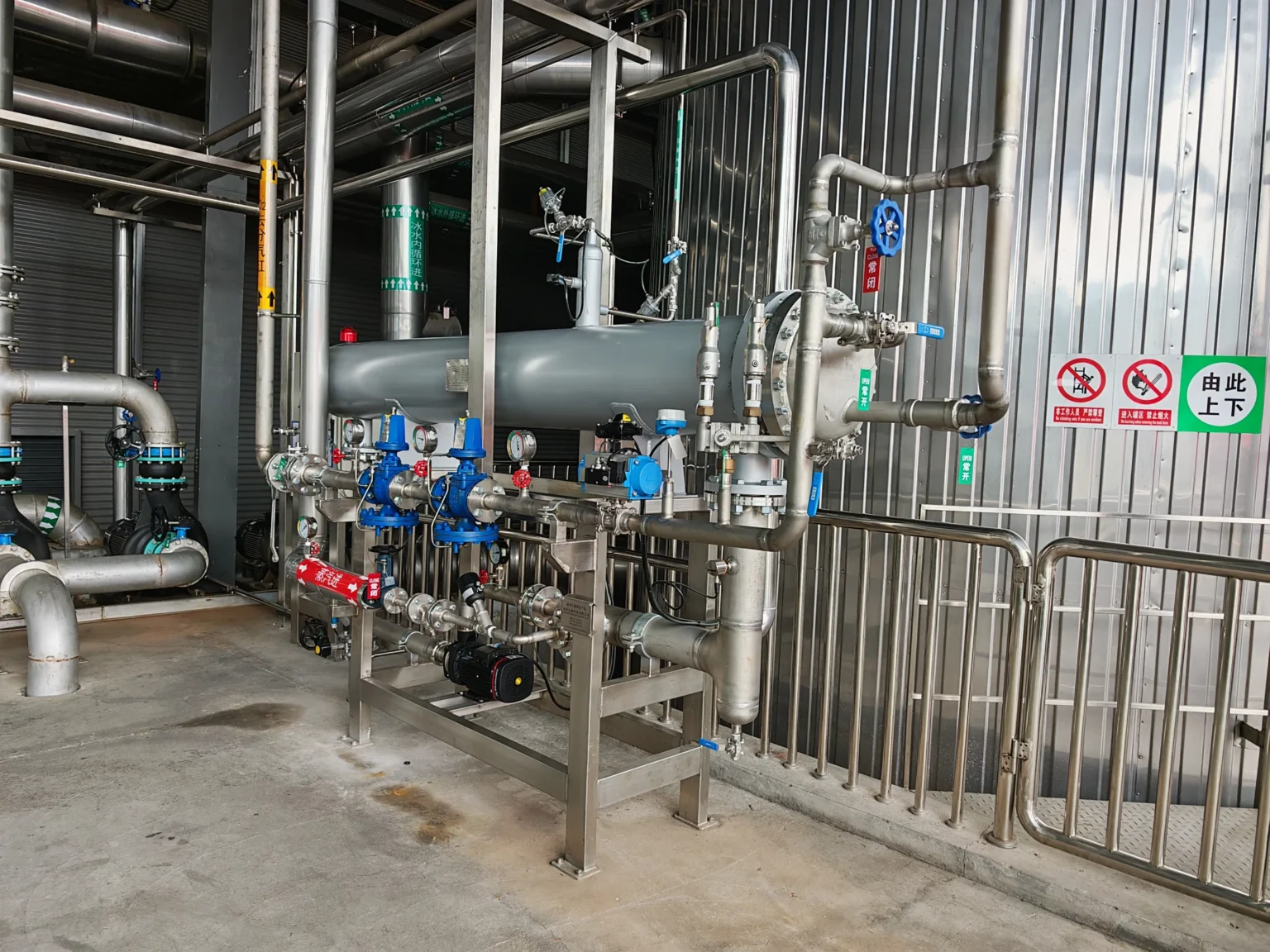
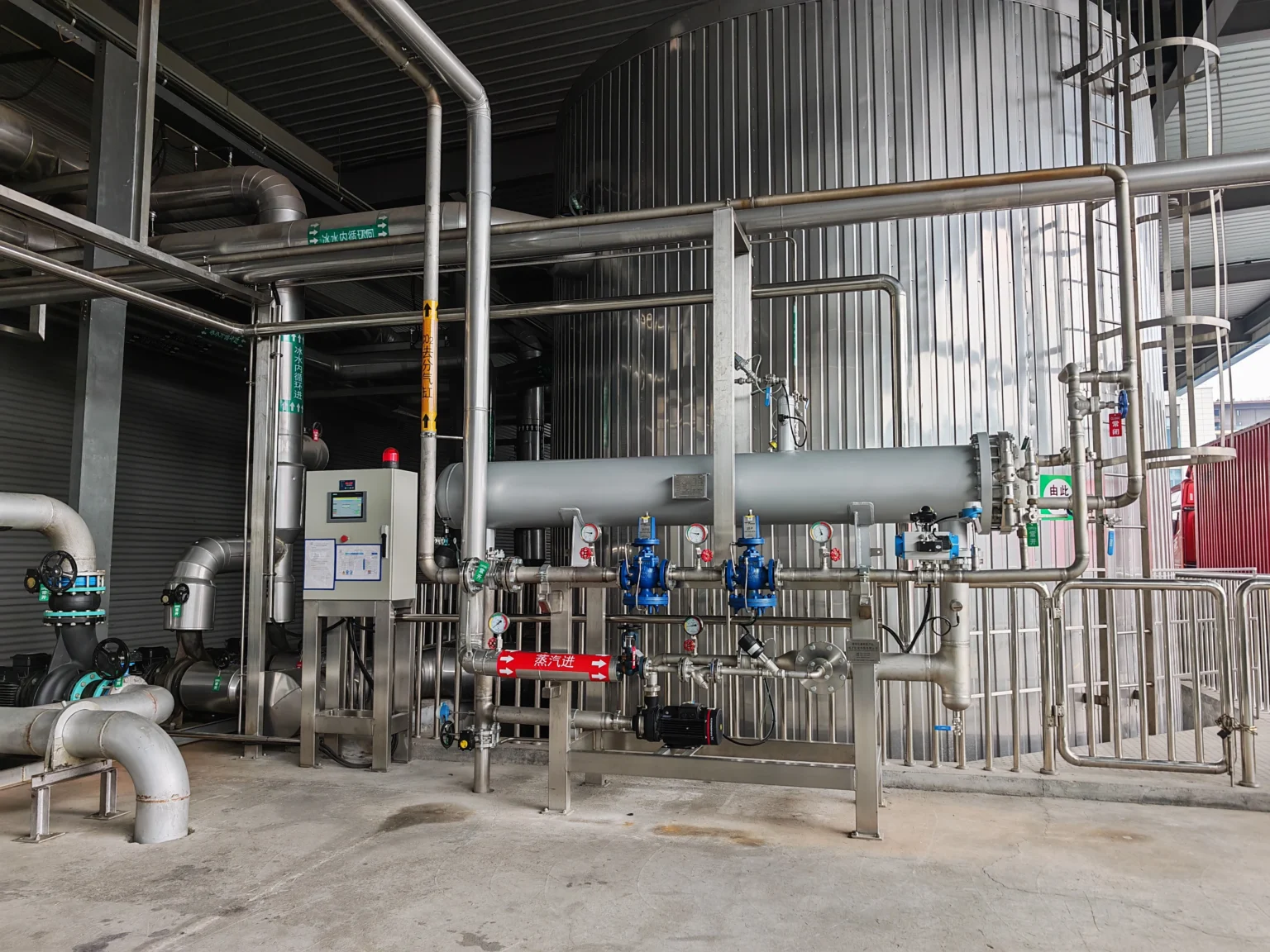
Hangzhou Qiandao Lake Brewery is recorded in our project register in 2024 with an 8,000 t/y nominal recovery capacity and a 1,000 kg/h system scope. The current worksheet identifies an EPC delivery and a high-purity food-grade design specification of at least 99.998%. The corporate brochure includes photographs of gas collection, treatment vessels and installed pipework within the brewery building.
The hourly and annual figures provide a useful basis for understanding the scale of the reference. They should still be read as design values. Actual recovery depends on the available fermentation gas, the operating calendar and the quantity of product accepted by storage and downstream use.
Collection and buffering around the brewery process
The photographed collection arrangement connects the fermentation source with the treatment equipment. For a comparable brewery, this interface needs to accommodate changes in gas generation while maintaining suitable conditions for downstream operation. The collection design should consider available flow, entrained foam or liquid and the point at which gas becomes suitable for recovery.
An early feasibility assessment should compare the fermentation-gas profile with CO₂ consumption. That comparison helps determine the value of buffering and liquid storage and identifies periods when recovered supply may exceed or fall below demand. It is more informative than selecting equipment from annual beer production alone.
Coordinating the treatment stages
Our brochure describes the engineering route around washing, compression, drying, purification and liquefaction. These stages have connected duties: feed conditioning protects downstream equipment, compression enables further treatment, and moisture and impurity removal support the final product specification. The final arrangement depends on the source analysis and the required quality limits.
The Qiandao Lake images show vessels and connecting pipework in a compact process area with access routes. For a new installation, layout decisions should preserve service access and make sampling, inspection and routine operator checks practical. Utility connections and control interfaces should be reviewed as part of the same layout exercise.
Sample analysis adds a measurable quality reference
The brochure reproduces SIMT report 2025I30-30-5925311001 for a 2025 sample. The reported CO₂ purity is above 99.999 vol.%, with water at 1.1 ppmv, oxygen at 1.2 ppmv and total sulfur excluding SO₂ below 0.1 ppmv. The sulfur basis is retained because it affects how the result should be interpreted.
These measurements complement the documented design purity. They show why useful quality evidence includes moisture and trace impurities, rather than only a single headline concentration. Results apply to the tested sample and should not be treated as an unconditional guarantee for every operating condition or a different source gas.
Relevance to the next brewery installation
Qiandao Lake provides a combination of register data, site photography and independent sample results. It is relevant to breweries considering a recovery system near the 1,000 kg/h scale and to buyers who want to see how collection, treatment and product verification are connected.
For a similar project, share gas flow and composition, fermentation schedules, consumption patterns, available utilities and the intended storage arrangement. Specify the impurity limits required by the brewery and any downstream customer. We can use this information to develop a coordinated equipment scope and a product-verification plan that reflects the actual source and the intended use.
Reference & evidence notes
Recorded capacity and quality values are source specifications, not independently verified operating output. Engineering discussion explains the application; it is not a reconstruction of unrecorded project details.
START WITH YOUR SOURCE
Discuss a project with a comparable source and scale.
Send your gas analysis, flow profile, product target and project location. We will help connect the technical questions with a practical supply scope.