YTC PROJECT REFERENCE
Ghana Phase III: 10,000 t/y food-grade CO₂ recovery
The Ghana Phase III project is recorded in our database in 2025 at 10,000 tonnes per year.
YTC / PHOTOGRAPHIC RECORD
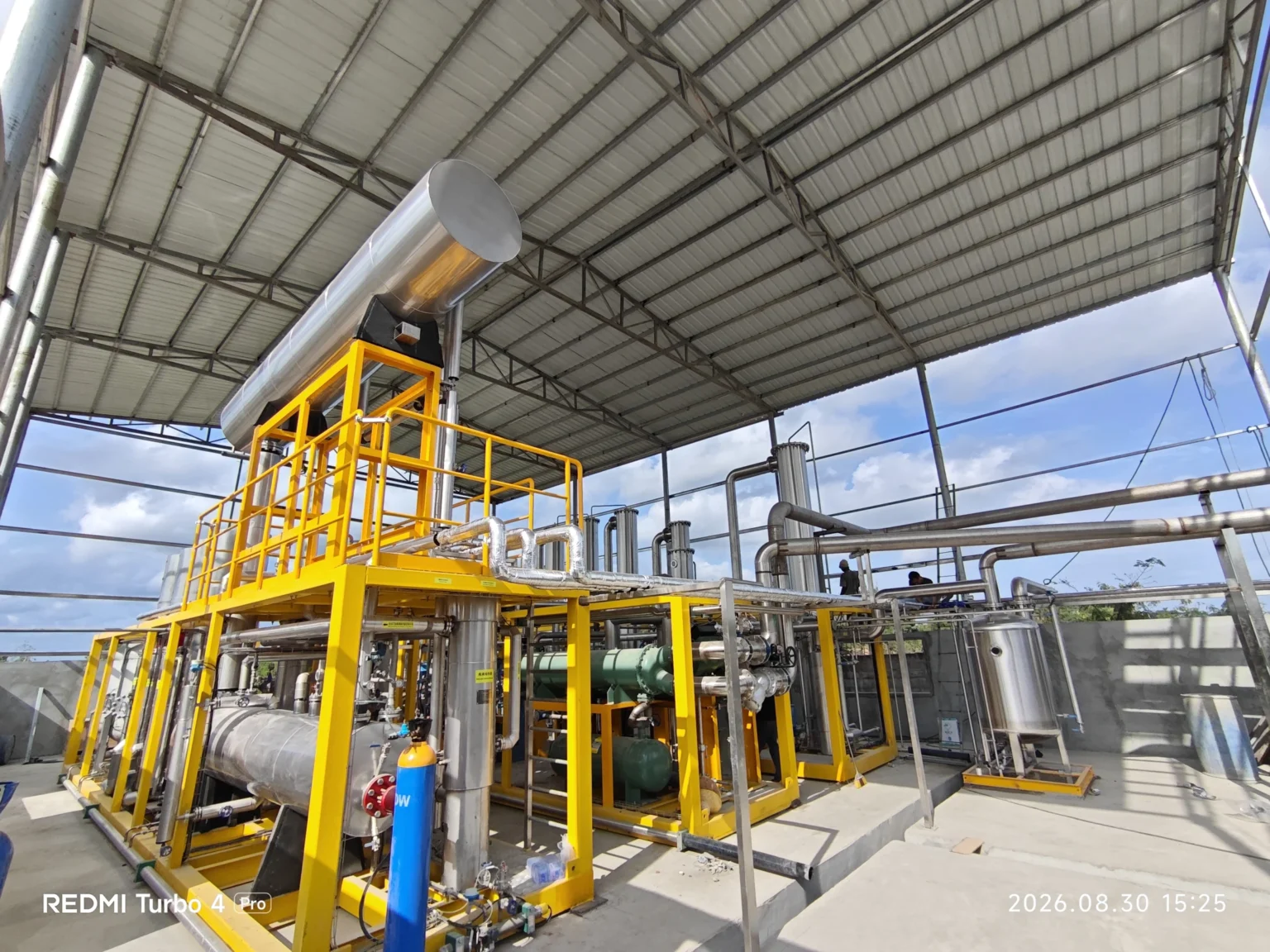
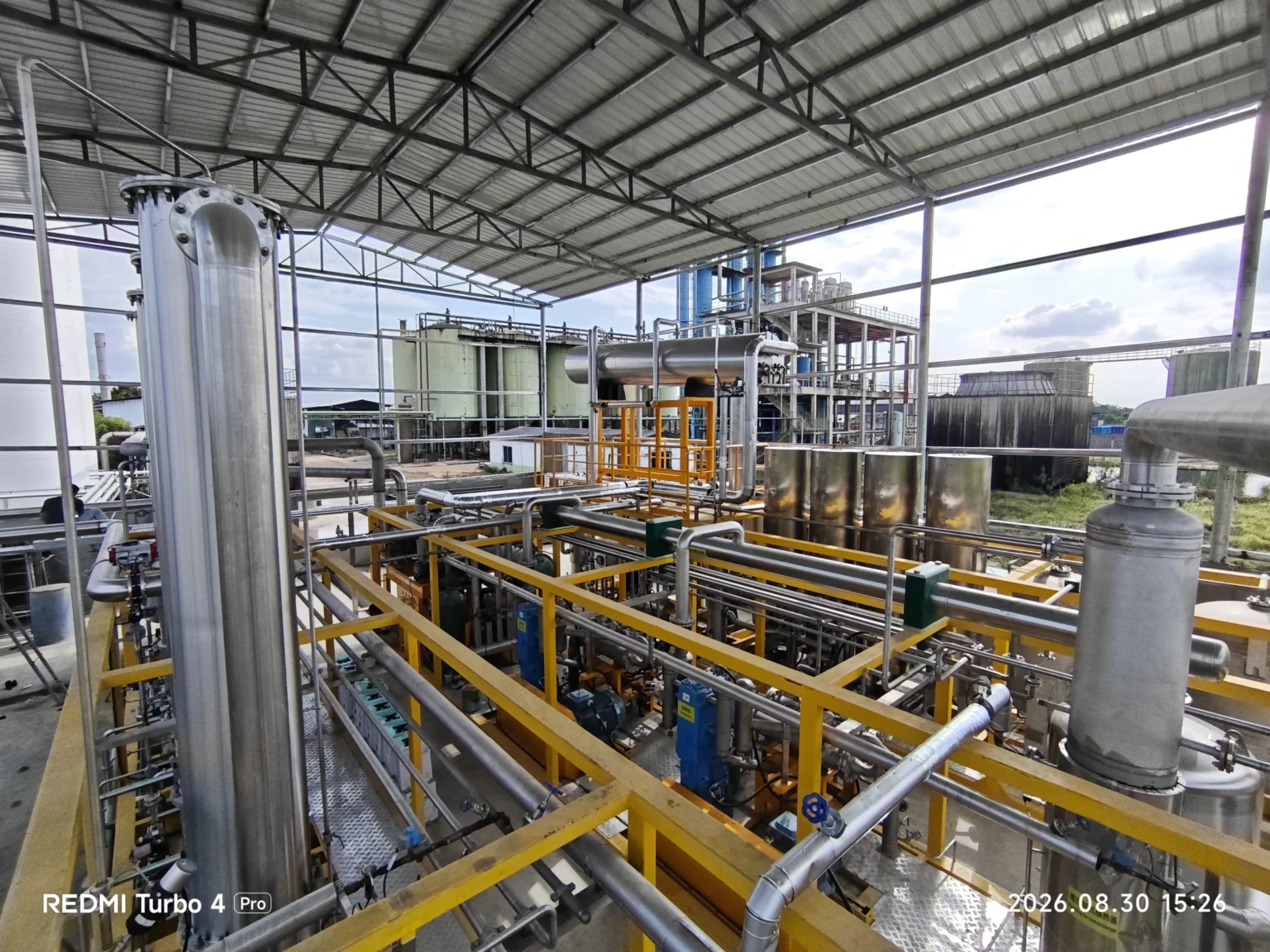
Inside the Ghana Phase III installation
We keep these installation photographs in our Ghana Phase III archive. Their August 2026 photo date is separate from the 2025 reference year in the project register.

| Reference element | Recorded basis |
|---|---|
| Source / application | Ethanol & distillery |
| Product specification | High-purity food-grade, purity ≥99.998% |
| Record IDs | 94, 107 |
An international reference with two capacity bases
The Ghana Phase III project is recorded in our database in 2025 at 10,000 tonnes per year. Its scope also identifies a 1,250 kg/h CO₂ recovery system, supplied with installation guidance. Our current master worksheet gives a high-purity food-grade specification of at least 99.998%.
We also retain a separate Ghana Phase I record from 2023 at 4,000 t/year. Our current archive has no Phase II entry. Please contact us for the project documents needed to confirm phase relationships and completion dates.
Understand the relationship between hourly and annual output
The 1,250 kg/h and 10,000 t/y design figures are consistent with an illustrative 8,000-hour annual basis. That arithmetic is useful for understanding scale, but it does not establish the project’s measured operating hours or production. Actual annual recovery depends on available feed, operating schedule, maintenance and the amount of product that can be accepted downstream.
For a comparable project, buyers should request an explicit mass balance and operating-calendar assumption. This makes it possible to compare different proposals without confusing equipment duty with the amount of saleable product expected each year.
The assessment should also compare expected production with confirmed storage and dispatch capacity, so an attractive production target remains operationally useful.
Define the source before selecting the treatment
We classify Ghana Phase III as Ethanol & distillery. Our earlier worksheet used the broader industrial-gas label. We confirm the actual feed composition during a project-specific review; the industry category does not replace gas analysis.
A representative gas analysis should identify CO₂, moisture, oxygen, nitrogen and source-specific trace contaminants. It should state sampling conditions and expected variation. Those inputs determine conditioning, compression, drying, purification and liquefaction duties more reliably than an industry label alone.
Plan the overseas installation and product interface
The documented delivery model is equipment supply with installation guidance. For a new overseas installation, the proposal should clearly allocate local civil works, utilities, mechanical installation, electrical connections and commissioning support. Drawing availability, equipment access and lifting arrangements need to match the shipment and construction schedule.
Storage and loading should also be aligned with the local CO₂ market. The recovery plant may produce steadily while customers collect product at particular times. Working tank volume and dispatch arrangements must reflect that difference. These interfaces help turn nominal recovery capability into a practical product-supply operation.
Why Ghana is relevant to your decision
The Ghana records provide tangible examples of our international portfolio and its work with a defined equipment-supply and guidance model. Phase III is particularly useful for buyers evaluating a medium-scale system with both hourly and annual reference capacities available.
To begin a similar project, share the feed-gas analysis, hourly availability, planned operating hours, local utility conditions and required impurity limits. Add the proposed storage volume, product distribution plan and local installation responsibilities. We can then prepare a process basis and delivery scope that connect source characteristics with liquid CO₂ output. The result should be a specification with transparent assumptions and an acceptance plan that can be reviewed by both technical and commercial teams.
Reference & evidence notes
Recorded capacity and quality values are source specifications, not independently verified operating output. Engineering discussion explains the application; it is not a reconstruction of unrecorded project details.
START WITH YOUR SOURCE
Discuss a project with a comparable source and scale.
Send your gas analysis, flow profile, product target and project location. We will help connect the technical questions with a practical supply scope.
Project register classification
The corresponding project record is classified as Ethanol & distillery, following our October 2026 confirmation. This industry label is separate from historical descriptions of gas source or equipment use.