
PRODUCT CENTER / COMPLETE SYSTEMS
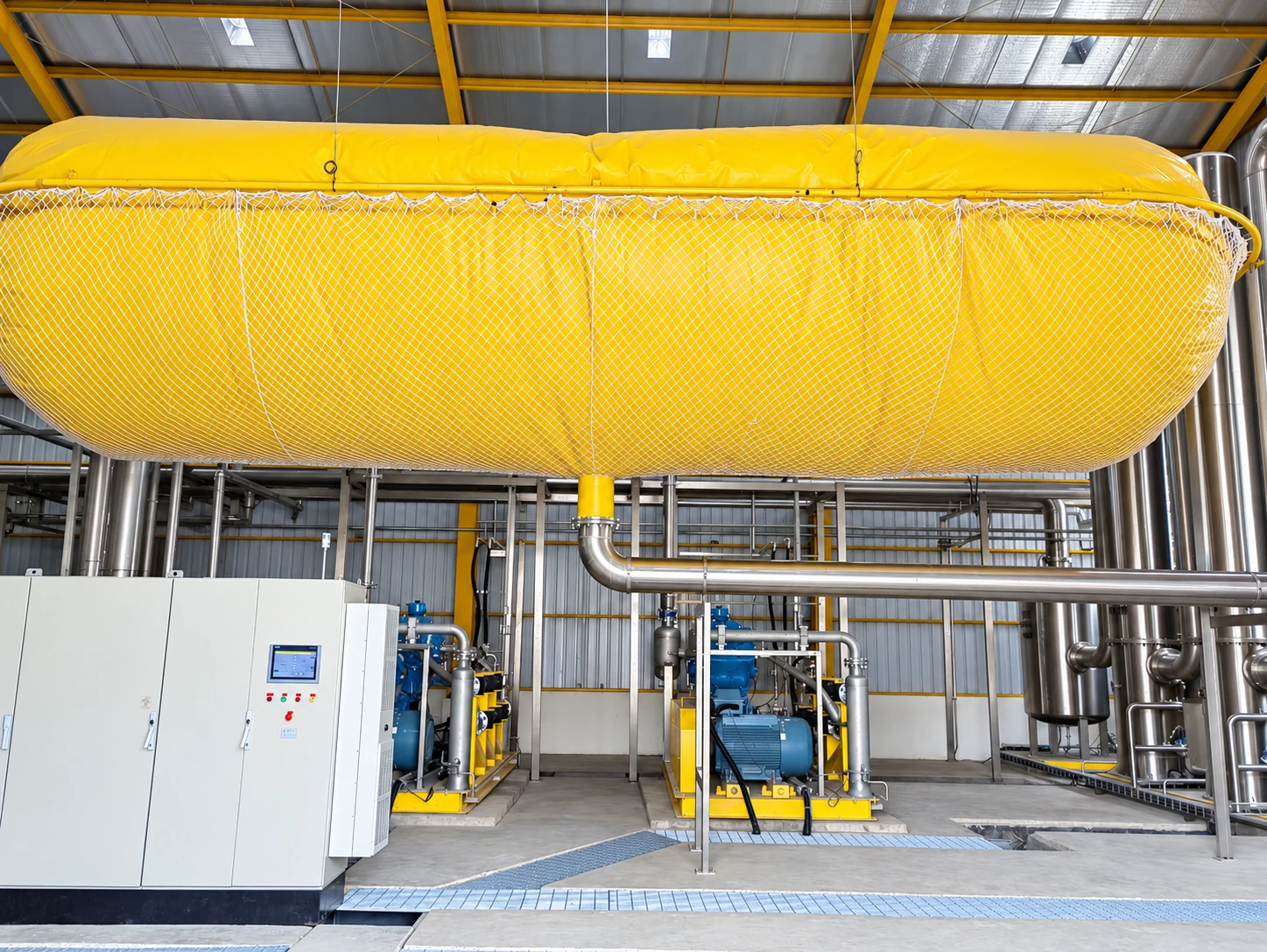
Ethanol CO₂ Recovery Plant
Ethanol fermentation can provide a substantial CO₂ stream. Turning it into a saleable or usable product requires matching the collection boundary to variable fermentation loads, organic contaminants, utilities and the downstream market.
| Project element | Design basis |
|---|---|
| Source | Ethanol or distillery fermentation gas |
| Reference scale | COFCO: separate 50,000 and 150,000 t/year nominal references |
| Product options | Liquid CO₂, application-specific gas or downstream dry ice integration |
APPLICATION OVERVIEW
Make fermentation CO₂ part of the production plan.
01
Feed profile
Document fermentation throughput, seasonal changes, shutdown schedules and the wet-gas composition. Separate total wet flow from the available CO₂ mass flow.
02
Organic contaminants
Assess alcohols, aldehydes and other source-related compounds. Select pretreatment and polishing from analysis rather than assuming one treatment removes every impurity.
03
Operating integration
Coordinate maintenance windows, utility constraints and cold-end turndown with the host plant. Product storage may smooth dispatch but cannot remove a sustained supply mismatch.
04
Product market
Determine whether output is for internal use, merchant liquid supply or a specified food-grade market. Each route changes sampling, loading, storage and documentation.
FROM SOURCE TO PRODUCT
Ethanol fermentation CO₂ recovery process
The route below illustrates a CO₂-rich feed. Flue gas needs upstream capture; biogas-derived streams need upstream separation and source-specific conditioning.
Match the plant to the gas source.
A gas holder or collection system balances variable production. Source acceptance and controlled diversion protect the downstream process from unsuitable gas.
Prepare the gas for compression.
Pretreatment depends on source contaminants. Fermentation carryover, soluble impurities, sulfur species and solvent traces require different treatment and monitoring strategies.
Create the required process conditions.
Compression and intercooling support the selected purification and liquefaction route. Liquid separation and machine protection are engineered around actual inlet conditions.
Control more than CO₂ percentage.
Adsorption and other selected purification stages manage water and specified trace contaminants. Bed regeneration and switching must preserve product quality throughout the operating cycle.
Produce liquid CO₂ to the agreed specification.
Refrigeration condenses CO₂. Refining and vent management address light gases where required. Product testing determines acceptance; liquefaction alone does not establish food-grade status.
Protect quality to the point of use.
Liquid storage, loading or vaporization must preserve product quality and comply with applicable pressure-system requirements. Operating procedures and traceable quality records complete the system.
PROCESS EQUIPMENT
CO₂ washing & pretreatment
Washing and pretreatment address selected contaminants and entrainment before downstream processing.
Explore equipmentPROCESS EQUIPMENT
CO₂ compression systems
Compression establishes pressure for the selected purification and liquefaction route.
Explore equipmentPROCESS EQUIPMENT
CO₂ adsorption & drying
Drying controls water before cold processing and product delivery.
Explore equipmentSPECIFICATION & SCOPE
Ethanol CO₂ recovery plant design requirements
We develop the process around the gas analysis, flow profile and required product. State every critical impurity limit and the measurement method alongside the CO₂ concentration.
| Item | Project definition |
|---|---|
| Source | Ethanol or distillery fermentation gas |
| Reference scale | COFCO: separate 50,000 and 150,000 t/year nominal references |
| Product options | Liquid CO₂, application-specific gas or downstream dry ice integration |
| Utilities | Electricity, cooling and regeneration utilities defined in the proposal |
| Required study | Seasonal mass balance, source qualification and product logistics |
Capacity, utility consumption and product guarantees are finalized in the project proposal at agreed inlet conditions. For comparable quotations, use our CO₂ plant procurement and acceptance guide to define the supply boundary, utility metering and acceptance tests.
RELEVANT YTC EXPERIENCE
Ethanol and fermentation CO₂ project references
Compare source, scale and specification with your own requirements.
FREQUENTLY ASKED QUESTIONS
Ethanol CO₂ recovery questions
Is annual ethanol output enough to size recovery?
No. It supports an initial estimate, but actual recoverable CO₂, operating hours, batch profiles, source composition and market demand must be established.
Can recovered CO₂ be sold for beverage use?
Only when the source, process, product testing and handling satisfy the applicable requirements and customer acceptance specification.
For food and beverage applications, review source qualification and the selected sample reports.
TECHNICAL INSIGHT
Understand the design decisions.
Convert a fermentation by-product into a planned product stream
An ethanol facility can make CO₂ a distinct product line when source qualification, plant integration and local offtake fit together. Fermentation throughput provides an initial indication of gas potential. Actual collection depends on the fermentation route, gas measurement basis, dissolved CO₂, vent losses, production interruptions and the portion of the stream admitted to recovery. A theoretical fermentation yield should therefore remain separate from the proposed liquid-product capacity.
Continuous or overlapping fermentation can support substantial recovery throughput, but a stable annual total can still conceal hourly peaks or a seasonal shutdown. Review at least normal operation, reduced production and restart conditions. The recovery plant and storage plan should suit the host facility’s real production calendar.
Address the organic load before the cold end
Fermentation gas may carry water, alcohol and other source-related compounds. Different compounds have different solubilities and separation behavior, so a wash stage, adsorbent and cold purification step should each have a stated duty. Specify the concentration range as well as the expected average; a treatment system designed around one favorable sample may have insufficient margin during a process change.
The collection boundary should also identify entrained liquid, foam and any cleaning or sanitation conditions that could affect the gas. Source isolation and communication with the ethanol operating team help prevent unsuitable streams from entering recovery. These interfaces are important even when the recovery plant has its own operators.
Engineer the merchant-liquid business boundary
A large recovery plant needs a product destination that can absorb its output. Compare storage capacity, tanker loading patterns, delivery distance, seasonal demand and customer qualification schedules. Production that exceeds local offtake may need to be curtailed; it cannot be counted at full selling value simply because the equipment can produce it.
A useful proposal separates the ethanol-plant interface, CO₂ processing, liquid storage, loading and customer acceptance responsibilities. Share available utilities and planned maintenance windows with us so the process arrangement can be coordinated with the host plant. This makes capacity, utility duty and product dispatch part of one investment decision.
Questions for the technical review
Can ethanol production volume replace off-gas measurements?
It can support an early theoretical estimate, but final selection needs actual gas flow, composition, collection availability and the operating schedule.
What limits a large ethanol CO₂ project besides gas supply?
Product qualification, utility capacity, seasonal operation, storage and the size of the reachable sales market can all become limiting factors.
START WITH YOUR SOURCE
Turn your CO₂ source into a defined project.
Send your gas analysis, flow profile, product target and project location. We will help connect the technical questions with a practical supply scope.
CONTINUE YOUR TECHNICAL REVIEW
Connect the specification with the evidence.
Relevant references
Review source, nominal capacity and the recorded supply scope.
Explore ↗ENGINEERING TOOLAssess your CO₂ source
Estimate recoverable quantity using visible assumptions.
Explore ↗BUYING GUIDEPrepare your specification
Define feed conditions, quality, utilities and acceptance before comparing proposals.
Explore ↗Fermentation gas collection: one route, defined interfaces
We integrate fermentation CO₂ collection into our ethanol and distillery recovery scope. We identify accepted collection points, batch or continuous flow patterns, buffering, foam and liquid carryover, organic contaminants and the connection to compression, purification and liquefaction. Brewery operators can use our dedicated brewery route for collection windows and reuse demand.
Send us the fermentation process, daily cycle, minimum/normal/maximum gas flow, measurement basis, pressure, temperature and trace analysis. Include cleaning conditions, production interruptions, utilities, plot space, product destination and local installation responsibilities. Our Ghana and Zambia references show related equipment-supply and installation-guidance scopes.