
PROCESS EQUIPMENT
Liquid CO₂ Storage Tank & Delivery
Storage balances production and demand while preserving product quality. Pressure systems and transfer arrangements require qualified engineering and local compliance review.

INSIDE THIS SUBSYSTEM
How it works in your plant.
How it works
We use insulated liquid CO₂ storage to buffer recovery output against use or dispatch. Usable inventory is established from the vessel’s approved operating limits rather than equated with its nominal volume.
System interfaces
Storage connects liquid production with loading or vaporization. Filling, withdrawal, pressure management, instrumentation and protective devices are defined for the vessel and the destination requirements.
Operation & maintenance
Track working inventory, pressure and the production–demand balance. Include insulation, instruments and protective devices in the qualified inspection plan; keep product-handling connections clean and traceable.
What we need for selection
Hourly or daily output and demand; delivery size and frequency; interruption reserve; liquid conditions; site layout; applicable vessel requirements.
We confirm the equipment arrangement, utilities, inspection documents and acceptance criteria in your project proposal.
EXPLORE THE SYSTEM
Related process equipment.
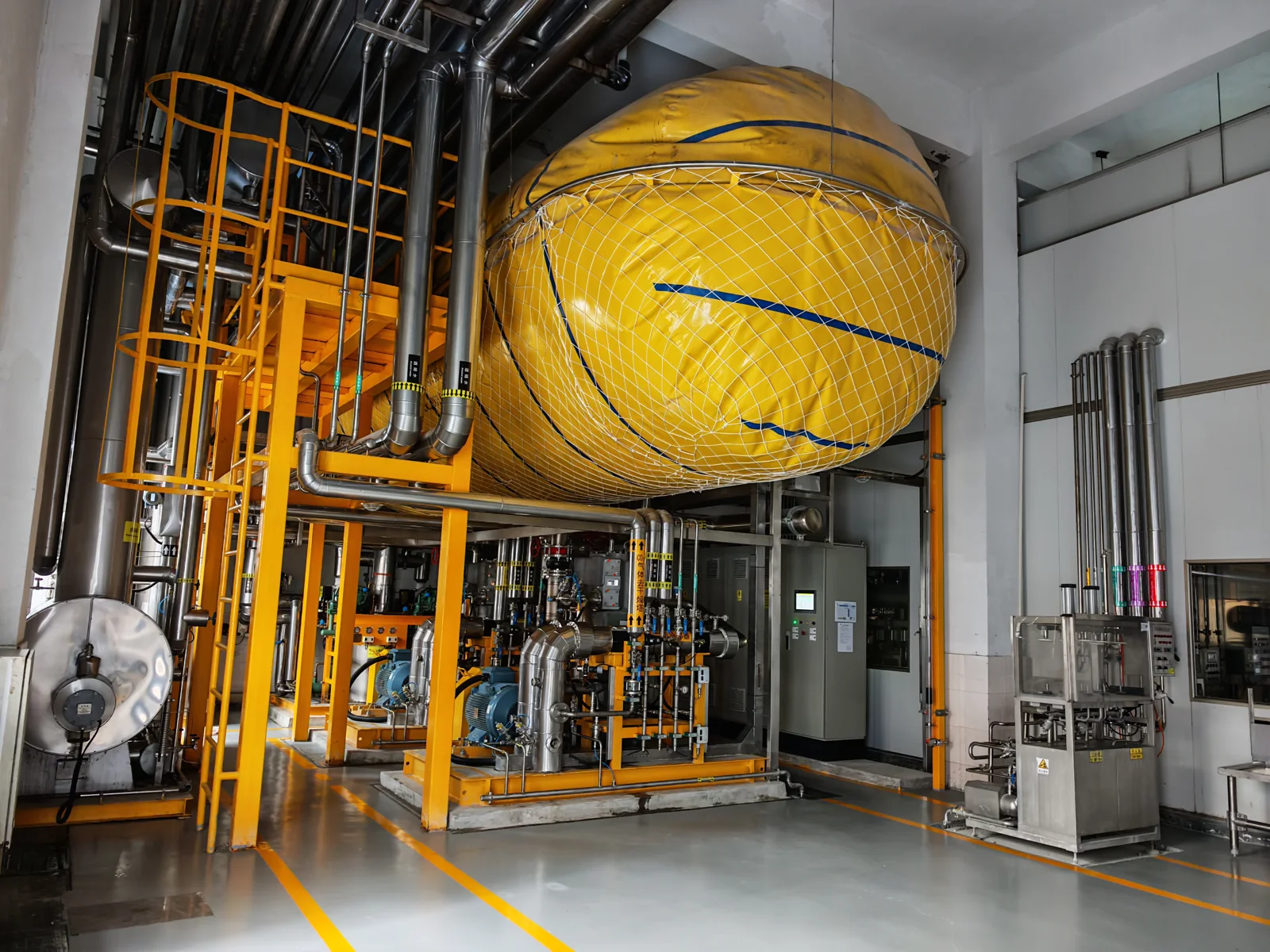
PROCESS EQUIPMENT
Gas collection & buffering
A collection system connects the source to the recovery train and smooths short-term variation.
Explore equipment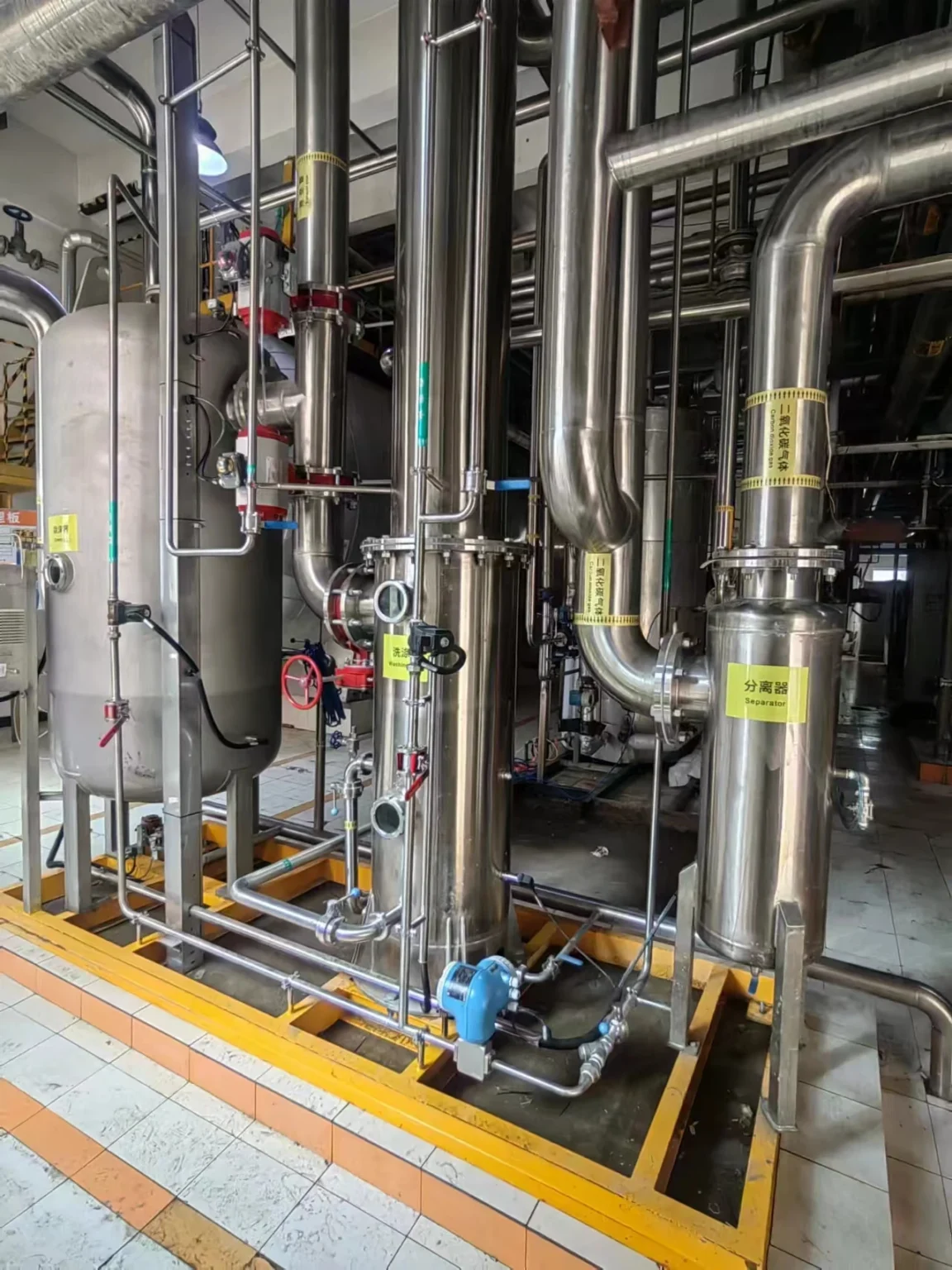
PROCESS EQUIPMENT
CO₂ washing & pretreatment
Washing and pretreatment address selected contaminants and entrainment before downstream processing.
Explore equipment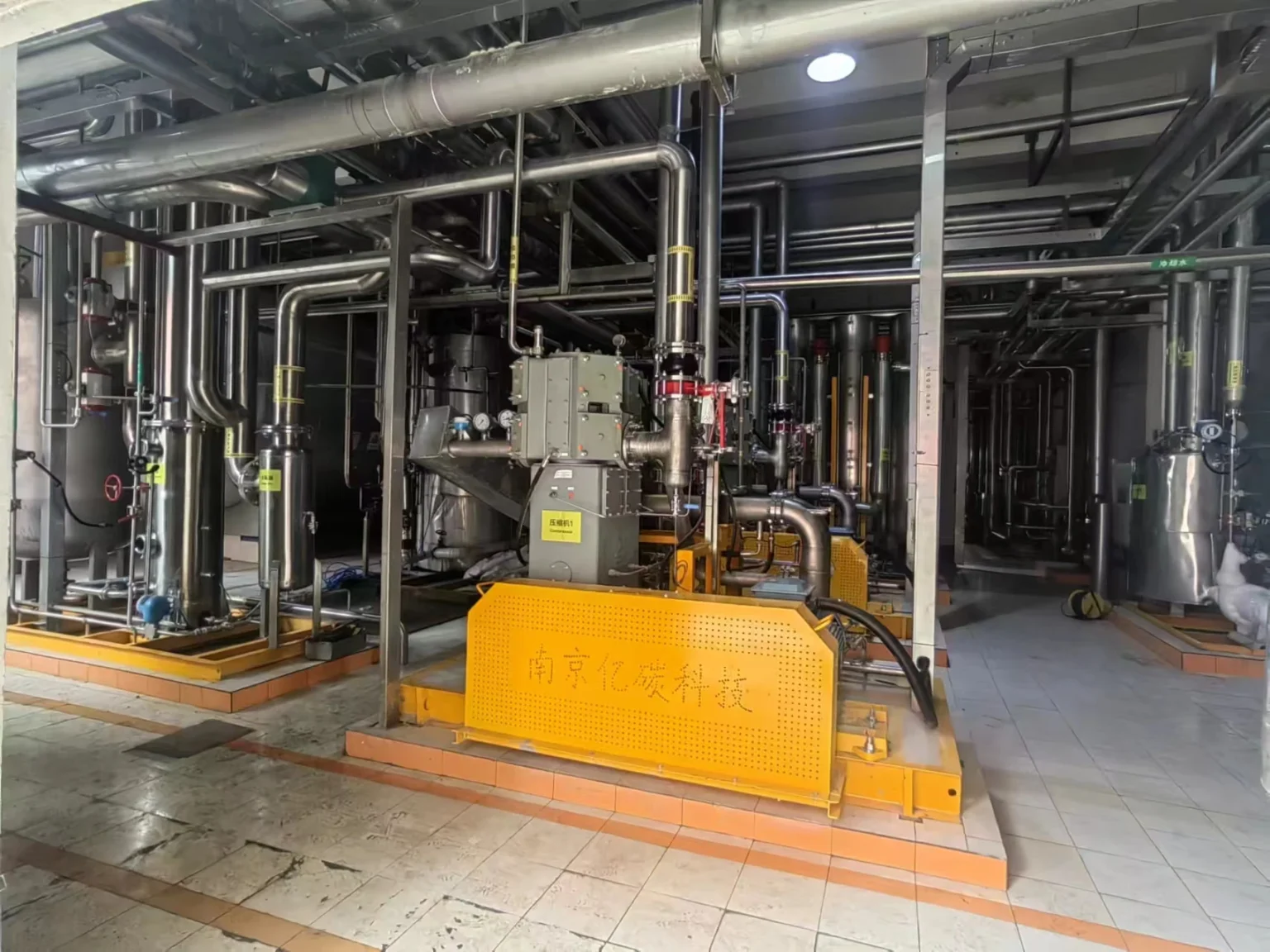
PROCESS EQUIPMENT
CO₂ compression systems
Compression establishes pressure for the selected purification and liquefaction route.
Explore equipmentTECHNICAL INSIGHT
Understand the design decisions.
Size usable inventory around the operating schedule
Liquid CO₂ storage is selected to balance production, demand and dispatch. The starting point is the inventory that the site needs between deliveries or production periods, plus the chosen allowance for interruption. Usable inventory differs from a tank’s total internal volume; permissible operating limits and the actual storage conditions need to be established by the equipment and project design.
A brewery may need stock to bridge a packaging peak, while a merchant plant may need room for a delayed tanker. A dry ice line can create a concentrated liquid demand during one shift. These patterns should appear in the storage study rather than be reduced to one average daily consumption figure.
Preserve product quality through transfer
Storage is part of the product-quality boundary. Filling connections, product-contact components, loading arrangements and the connection to downstream use should fit the accepted product specification. When different sources or grades share an installation, product segregation and traceability need explicit attention.
Heat ingress and the operating schedule affect pressure management. The proposal should coordinate the tank with production, transfer and consumption so the intended operating range is achievable. Any associated refrigeration, vaporization or gas-return system should appear in the same scope and utility discussion.
Resolve local interfaces before delivery
The installation needs a defined location, access for equipment and vehicles, appropriate foundations and the required local pressure-system review. Responsibilities for inspection, registration where applicable, protective systems and operating documentation should be assigned early. Exact settings and procedures belong to the qualified project team and the supplied equipment documentation.
Provide us with daily demand, dispatch size and frequency, maximum planned interruption, site layout and the destination’s applicable requirements. This allows storage to be selected as a practical part of the recovery project. It also helps avoid a large tank becoming a substitute for unresolved supply, loading or customer-demand questions.
Questions for the technical review
Should storage be sized from annual production alone?
No. The relevant factors include production and withdrawal timing, usable inventory, delivery pattern and the interruption the site intends to cover.
Can liquid storage serve both a brewery and a dry ice line?
Potentially, but their combined demand, quality requirements and control priorities must be included in the inventory and interface design.
START WITH YOUR SOURCE
Turn your CO₂ source into a defined project.
Send your gas analysis, flow profile, product target and project location. We will help connect the technical questions with a practical supply scope.
CONTINUE YOUR TECHNICAL REVIEW
Connect the specification with the evidence.
Relevant references
Review source, nominal capacity and the recorded supply scope.
Explore ↗ENGINEERING TOOLAssess your CO₂ source
Estimate recoverable quantity using visible assumptions.
Explore ↗BUYING GUIDEPrepare your specification
Define feed conditions, quality, utilities and acceptance before comparing proposals.
Explore ↗